


Screen printing
Screen printing technology – a technique where ink is applied through a stencil onto the printed material; this basic principle of screen printing has remained virtually the same for centuries. However, what has undergone dynamic development, especially in the twentieth century, are printing matrices, printing inks, and most notably, screen printing machines.
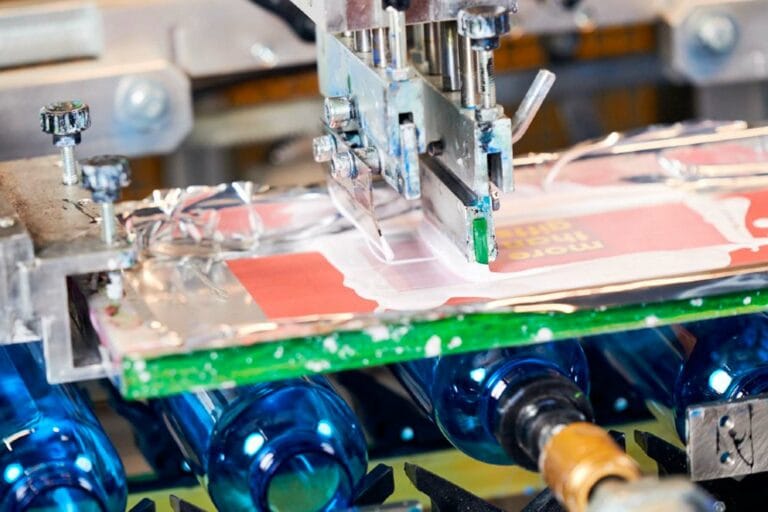
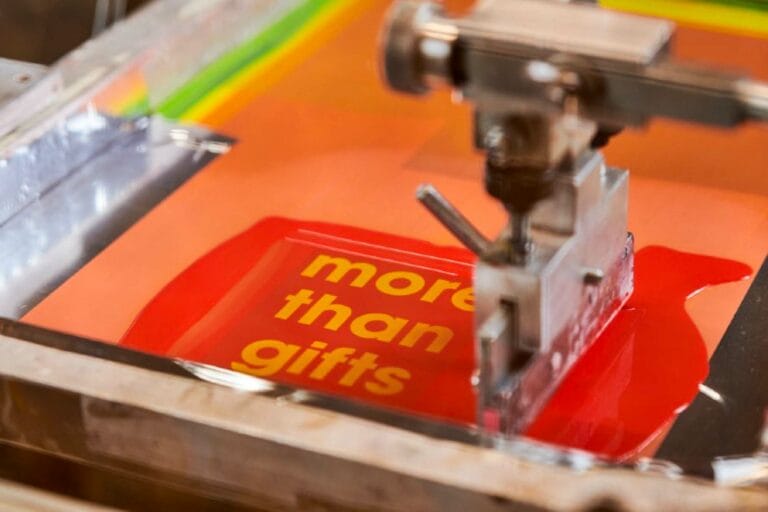
Screen printing is a printing technique that uses a mesh in a frame to transfer ink onto an object. The ink is placed on the mesh and then pressed through it onto the product, but only in areas where the print is intended to be. Only one color is printed in a single pass, so several screens must be used to create a multi-colored image or logo. After printing, the product is placed in a drying tunnel to cure the ink on the item.
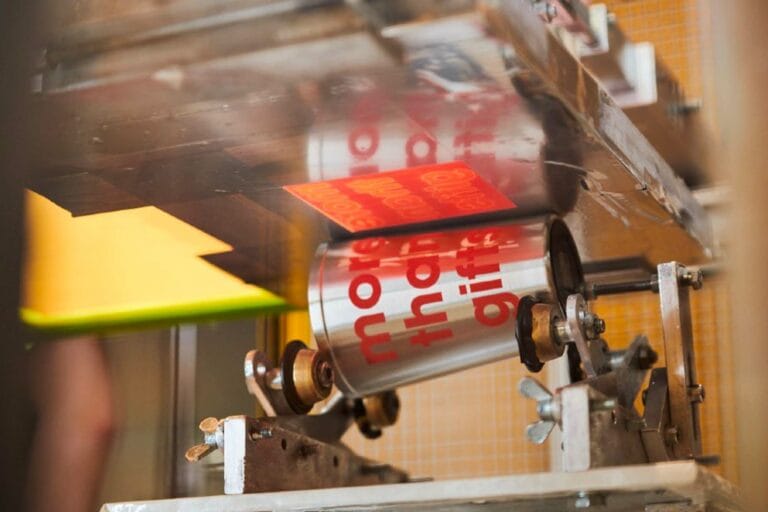
In 360 rotary screen printing, the same technique is applied to a cylindrical object. The object is rotated during the printing process, resulting in a circular screen print.
About Screen Printing
Materials Suitable for Screen Printing
- Cotton and blends – the most common textiles for high-quality and durable printing.
- Polyester and functional textiles – possible, with the selection of appropriate inks and procedures (due to dye migration).
- Paper and cardboard – posters, packaging, POS materials.
- Plastics and boards – PVC, PP, PET, or other substrates depending on the application.
Processing and Execution Options
- Single-color and multi-color printing – each color is a separate layer, ensuring high durability of the result.
- Large area printing – suitable for simple motifs and solid colors.
- Mass production – ideal technology for medium and large runs of the same motif.
- Color mixing according to swatches (if offered) – unification of corporate identity.
Why Choose Screen Printing
- High durability and long life – the print is strong, stable, and suitable for frequent use.
- Excellent coverage and saturation – great for solid colors and printing on dark substrates.
- Economical for higher volumes – the larger the series, the more advantageous the price per piece.
- Special inks and effects – options that other technologies often cannot provide or are significantly more expensive.
Printing Matrix
Today, the printing matrix most often takes the form of an aluminum frame with a special fabric stretched over it, known as mesh. The quality of this permeable mesh determines the use of the matrix for printing on specific materials; thus, we have many types of matrices for various materials. A printing matrix for screen printing is not permanent; the customer only pays for the exposure of their motif using a light-sensitive emulsion on the matrix, which is used repeatedly and has a much higher value than what is charged for the mere production of the motif on it. The lifespan of the motif depends on the type of matrix and is in the range of several thousand prints, or in the case of agreed storage for reprinting, in the range of months.
Screen Printing Inks
Printing inks are classified by their curing method or chemical nature, such as water-based, alcohol-based, solvent-based, plastisol, sublimation, two-component, and UV inks. Their use is always tied to a specific printing application, the type of material being printed, and the requirements of the client.
Screen Printing Machines
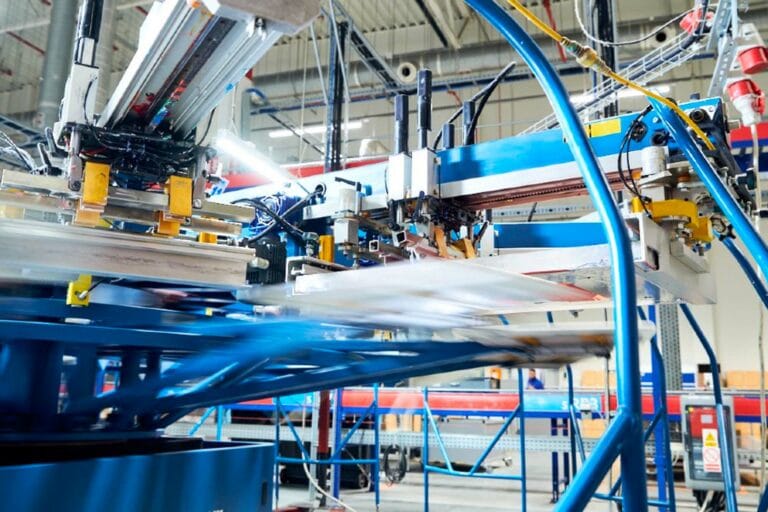
Screen printing machines undergo development to achieve the best possible printing results and labor productivity. Again, it is the materials that predetermine the screen printing technique. For absorbent textile substrates, modern carousel screen printing machines have been developed; these apply all necessary design colors in a single placement of the material on the moving print table. Non-absorbent materials, however, require the existing print to dry before each subsequent printing color is applied, so they are printed on single-position machines and are removed from the print table after each print to have the inks dried in a drying tunnel. Continuous lines can be assembled from such equipment. Cylindrical surfaces must be printed using rotary screen printing, which exists in many forms, from simple manual tables to sophisticated lines for large volumes.
Our Products
A wide range of printing products for your screen printing business
- Printing on T-shirts, hoodies, and polo shirts – durable printing for corporate clothing, merchandising, and team collections.
- Workwear – printing of logos and markings on clothing for operations and services (depending on material and placement).
- Sportswear – printing of club motifs and simple graphics in higher volumes.
- Textile bags and sacks – popular promotional products with very good print durability.
- Promotional accessories – aprons, caps, towels, and other textile assortments (depending on material).
- Series for events – fast and economical production of larger quantities with the same motif.
- Posters and art prints – vibrant colors, opaque layers, and a typical “screen-printed” look.
- Stickers and labels – suitable for special colors and higher opacity (depending on the chosen material).
- Printing on boards and panels – signage, navigation, industrial and information boards (depending on technology and substrate).
- White / opaque layers – printing on dark materials, underprinting to enhance colors.
- Metallic, fluorescent, and other special inks – effects that standard digital printing often cannot replace.
- Varnishing and partial effects (if offered) – highlighting a logo or detail.
Where we use screen printing
We print on a six-color carousel with fourteen positions; the printing palette measures approximately 50 × 80 cm. Six colors mean that even multi-color logos pass through the machine in a single run, while the fourteen positions maintain the pace for large series.
Screen printing is our choice for larger series where the print needs to last and be cost-effective per piece. We use it for textile printing — corporate T-shirts, workwear, and team clothing — and for printing promotional and gift items, such as bags.
For individual pieces and full-color motifs with gradients, we prefer to use DTF printing, where no screens need to be prepared.
Not sure which technology is right for your motif? Email us at info@i-reklamka.cz or call 469 811 991.
References
View some of our projects